
Study in Japan
Why Students Love Japan:
World-Class Prestige: Earn a globally recognized degree from universities renowned for their excellence in fields like engineering, technology, and applied science, often ranking highly across Asia.
Cutting-Edge Innovation: Immerse yourself in a society that is a global leader in technology and robotics, offering unparalleled access to advanced research and industry connections.
Affordable Tuition: Benefit from relatively lower tuition fees at national and public universities compared to the UK, USA, and Canada, making high-quality education more accessible.
Cultural Immersion: Experience a unique and rich cultural heritage that is safe, orderly, and offers a profound level of cultural immersion alongside modern city life.
Work & Earn: Eligible students can work up to 28 hours per week during term time and up to 40 hours per week during long holidays, providing financial support and valuable Japanese work experience.
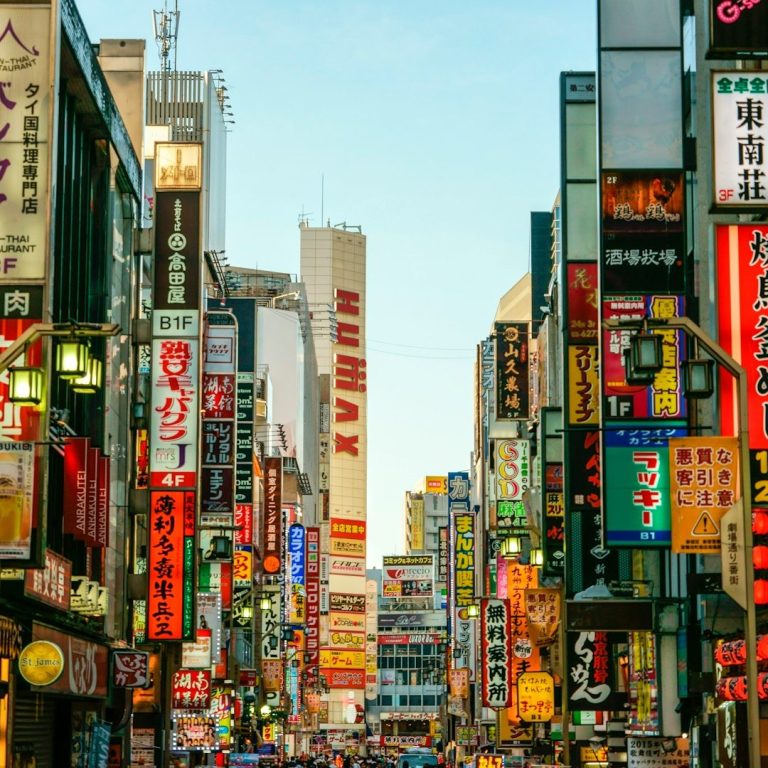



Steps to follow before applying for a visa.
Step 1: English/Japanese Test:
Take the required language exam—TOEFL/IELTS for English-taught programs or JLPT for Japanese-taught programs.
(We confirm the exact score your chosen university requires.)
Step 2: University Application:
We help you submit your application to secure your Letter of Acceptance from a Japanese university or college.
Step 3: Pay Tuition Deposit:
Once accepted, pay the required tuition deposit to confirm your seat and receive your official Certificate of Eligibility (CoE).
Step 4: Financial Proof:
Prepare bank statements, sponsor letters, or scholarship documents to prove you can cover tuition, living costs, and travel expenses.
Step 5: Health Check:
Complete any required medical examinations and obtain health insurance coverage for the duration of your stay.
Step 6: Student Visa Application:
We guide you in submitting your Student Visa application at the Japanese Embassy or Consulate, including your CoE and financial documents.
Step 7: Visa Approval & Travel:
Once your visa is granted, book your flight and prepare for arrival in Japan.
Step 8: Pre-Departure:
Attend your Japan pre-departure briefing, arrange accommodation, and get ready to begin your studies and experience Japanese culture!
Academic and English Language Proficiency Requirement
Undergraduate: 4 years
English/Japanese: IELTS 6 / TOEFL 60+ / JLPT N2 (for Japanese-taught programs)
Percentage: 55% and above
Gap: 1-2 years (evidence required)
Graduate / Master’s: 1-2 years
English/Japanese: IELTS 6.5 / TOEFL 80+ / JLPT N1 (for Japanese-taught programs)
Percentage: 60% and above
Gap: 2-3 years (evidence required)
Language Tests Accepted:
IELTS | TOEFL | PTE | JLPT
Intakes in Japan:
April | September | October
Financial (average)
Tuition Fee (Per Year): ¥680,000 – ¥1,100,000 (Approximately, depending on the type of institution: National, Public, or Private University/Language School).
Annual Living Cost (National Average Estimate): ¥1,116,000 (Based on an average monthly expense of about ¥93,000).
Required Bank Balance (For 1-Year COE): ¥2,000,000 – ¥2,500,000 (This is the minimum savings amount your sponsor must typically show to cover tuition and living expenses for the first year).
Required Bank Balance (For 6-Month COE): ¥1,000,000 – ¥1,500,000 (For shorter programs).
Sponsor's Annual Income Proof: Your sponsor (or you, if self-sponsoring) must show a stable annual income (often ¥2,000,000 or more) in addition to the required savings.
Dependent (Spouse and/or Child): The student must demonstrate an ability to support the family. While there is no fixed minimum, the student's savings or scholarship amount must be sufficient to cover the living expenses of all family members.
Health Insurance (Post-Arrival): ¥15,000 – ¥25,000 per year (Compulsory National Health Insurance).
Visa Application Fee: Approximately ¥3,000 for a single-entry visa (Fees can vary by embassy and are subject to change, potentially rising significantly in the future).
Average Total Cost (Per Year):
Single Applicant: ¥2,000,000 – ¥3,600,000 (This includes tuition and living costs for the first year, but does not include the funds kept as proof of savings).
With Dependent(s): The total fund requirement increases to cover the dependent's living expenses.
Note on Financial Proof: You must provide official documents proving the financial stability of the sponsor, including a Bank Balance Certificate, Sponsor's Income Proof (tax invoices or income certificate), and Sponsor's Employment Certificate.
Method of financials presentation.
Bank Balance/Savings: The primary and most important proof. Funds must be in the student's name or the sponsor's name.
Scholarships/Grants: Official award letter from the Japanese government (MEXT), university, or private foundation.
Pre-paid Fees: Proof of tuition fees already paid to the Japanese institution.
Financial Instrument Details
Bank Balance Amount: While there is no official fixed amount, most schools and Immigration Services expect a bank balance of ¥2,000,000 to ¥2,500,000 (Japanese Yen) for a one-year visa to cover tuition and living expenses.
Bank Statement Hold Period: The bank certificate/statement should be recently issued (typically within the last 3 months) for the COE application.
Consistency: Immigration checks for consistent savings and is suspicious of sudden large deposits. Some applications may require transaction history covering the last six months.
Currency: Bank certificates can be in foreign currency, but the equivalent amount in JPY must be clearly stated or converted.
Unacceptable Funds: Property valuation, pension funds, or non-liquid investments are not accepted.
Financial Requirement Duration
COE Application: The required savings must be shown to cover the full tuition and living costs for at least the first year.
Renewal: The student must be prepared to show the same level of savings or income stability every time they renew their status of residence (typically annually).
Required Evidence of Financial Support (Sponsorship)
Sponsor: The preferred sponsor is a parent or direct relative. Self-sponsorship is possible but often faces higher scrutiny and stricter savings requirements. Non-family sponsors are generally discouraged.
Required Sponsor Documents: If using a sponsor, the following are necessary:
Certificate of Bank Balance in the sponsor's name (showing the required amount of savings).
Proof of Sponsor's Income/Taxation: Documents issued by a public office or employer showing the sponsor’s annual income (often required to be stable for the last 1–2 years).
Sponsor's Employment Certificate or Business Registration (to prove the source of income is stable).
Proof of Relationship (e.g., Birth Certificate) between the student and the sponsor.
Sponsor's Annual Income: Immigration generally looks for a stable annual income of at least ¥2,000,000 (or higher depending on the region and the length of the program) to prove sustainability.
Japan Student Visa: Application and Document Requirements
Applying for the Certificate of Eligibility (COE)
The COE is issued by the Japanese Immigration Services Agency and is the most crucial step, requiring detailed academic and financial proof. This application is typically handled by the educational institution on your behalf.
Admission Documents:
Application Form for Admission and COE.
Graduation Certificates: Certificates confirming all previous qualifications (High School, Bachelor's, etc.).
Academic Transcript: Full academic record of subjects studied and grades achieved.
Japanese Language Proficiency Certificate: Proof of Japanese study hours (e.g., 150 hours minimum for language school applicants) or JLPT/J-TEST scores (if applicable).
Photographs: Recent, passport-sized photos.
Copy of Passport: Valid passport copy.
Personal Statements:
Reason for Study Statement: Detailed essay explaining your motivation for studying in Japan, your course choice, and future plans.
Personal History/CV/Resume: Required, detailing academic history and work experience.
Financial Documentation for COE (Sponsor-Focused)
These documents are required for the COE application to prove the sponsor’s stability.
Certificate of Bank Balance (Savings): Must show the required liquid funds (typically ¥2,000,000 – ¥2,500,000 for the first year) and must be recently issued (within 3 months).
Sponsor's Income/Taxation Proof: Official documents issued by a public office (e.g., tax returns, income certificates) showing the sponsor's stable annual income (often for the last 1–2 years).
Sponsor's Employment Certificate: Official letter from the sponsor's employer or business registration (to prove the source of income is stable).
Sponsorship Letter: A formally signed letter from the financial supporter.
Proof of Relationship: Documents like a Birth Certificate or Family Registration to prove the relationship between the student and the financial sponsor.
List of Necessary Documents for Visa Application (Post-COE)
Once the COE is issued and sent to you, you apply for the visa at the Japanese Embassy/Consulate in your home country.
Visa Application Form: Completed form available from the Embassy.
Passport: Original, valid passport.
Photos: Recent, passport-sized photo.
Certificate of Eligibility (COE): The original COE document issued by Japanese Immigration.
Academic Documents: (Some Embassies require copies of the original Transcripts and Certificates again).
Other Documents: Any additional documents requested by the Japanese Embassy during the application process.
Visa Fee: Payment of the required visa fee (approximately ¥3,000 for single-entry).
Please fill in the form and our team will get be in touch with you.